Home / About
01 — The Person
The person behind the profile.
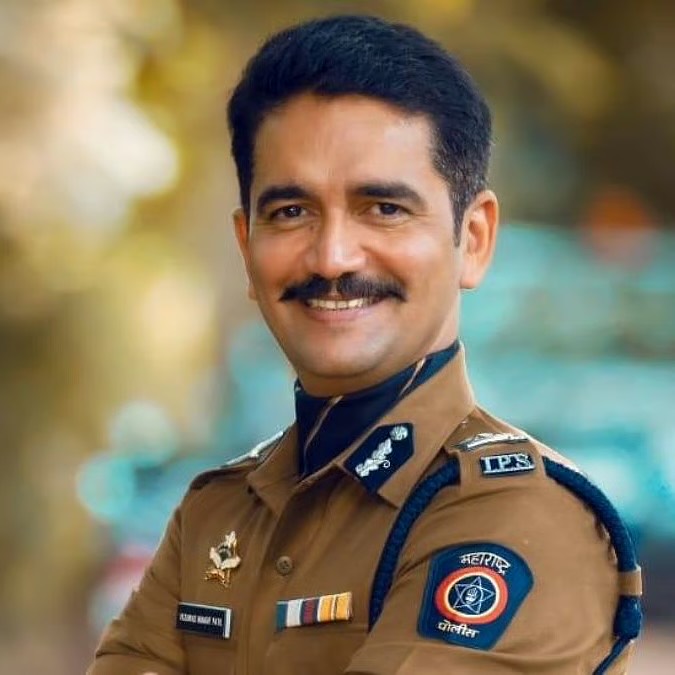
A career in the Indian Police Service is usually read through ranks and postings. This page reads it the other way round: where he began, what he studied, how the work started, and what the record actually shows.
Vishwas Narayan Nangre Patil was born on 1 June 1973 in Kokrud, a village in the Sangli district of western Maharashtra. The family farmed. His father served as the village sarpanch — the elected head of the village council — and, in the accounts published at the time of his son's appointments, encouraged him towards higher education and public service.
He studied at Shivaji University in Kolhapur and afterwards at Osmania University in Hyderabad. He entered the Indian Police Service with the 1997 batch and was allotted the Maharashtra cadre, which is where his entire service has been spent.
Nearly three decades later he holds charge of one of the state's largest city forces. In between there are district postings, two range commands, a metropolitan law-and-order command, a state anti-corruption command, two published books, and one night in November 2008 that made his name nationally known.
The record, briefly
- Full name
- Vishwas Narayan Nangre PatilAlso transliterated Nangare Patil
- Born
- 1 June 1973Kokrud, Sangli district, Maharashtra
- Background
- Farming familyHis father served as the village sarpanch
- Education
- Shivaji University, KolhapurLater, Osmania University, Hyderabad
- Service
- Indian Police Service, 1997 batchMaharashtra cadre
- Present charge
- Commissioner of Police, Nagpur CityCharge assumed 29 June 2026
- Recognition
- President's Police Medal for GallantryAwarded 2015
- Published work
- Mann Mein Hai Vishwas · Kar Har Maidan FatehThe first published in English as Head Held High
Early life
Kokrud, Sangli district.
Kokrud sits in the Shirala region of Sangli district, in the agricultural belt of western Maharashtra. It is a village, not a town, and that is the substance of the fact: the education system available to him at the outset was a village school system, and the household was a farming household.
The single documented detail about the family that recurs across published accounts is that his father held elected office as sarpanch. In the reporting that accompanied his later appointments, this is consistently presented as the source of the family's emphasis on education and on public office as a form of work.
Beyond that, this site does not speculate. Personal motivation is the easiest thing to invent in a profile of this kind and the hardest to verify, so it is left where it belongs — in his own published memoir.
Education
Two universities, then the examination.
His university education is documented at Shivaji University, Kolhapur — the regional university serving Kolhapur, Sangli and Satara — and at Osmania University, Hyderabad, one of India's older public universities.
He then sat the Union Public Service Commission's civil services examination and entered the Indian Police Service with the 1997 batch. Published sources differ on the finer details of degrees and dates, so this site records the institutions, the service and the batch — each of which is consistently reported — and does not fill in the rest.
Professional beginnings
Dhule, Nanded, Latur.
His first substantive posting was as Assistant Superintendent of Police in Dhule, in north-west Maharashtra — the standard first field charge for an IPS probationer, and the point at which an officer takes responsibility for a subdivision rather than observing one.
He moved on as Additional Superintendent of Police in Nanded, in the Marathwada region, and then to his first independent district charge as Superintendent of Police in Latur from 2002 to 2004. A district SP holds the whole of a district's policing: its stations, its investigations, its law and order, and its personnel.
Those years matter to the shape of the career. By the time he reached Mumbai he had already commanded a district force, and the metropolitan postings that made him publicly known came on top of a rural grounding rather than instead of one.
A formative night
26 November 2008.
On the night of 26 November 2008 he was Deputy Commissioner of Police for Zone 1, the Mumbai police zone covering the southern tip of the city — which placed the Taj Mahal Palace Hotel inside his jurisdiction when the coordinated attacks on the city began.
The documented account is that he was among the first police officers to reach the hotel, that he entered the building without body armour with the small force available to him at that hour, and that the first police response there was concerned with holding the attackers away from the areas where several hundred guests were gathered, and with getting people out, in the hours before specialist units arrived.
Seven years later, in 2015, the President's Police Medal for Gallantry was awarded to him for his part in the counter-terrorist operations of those days. The full account, including his own, is set out on the impact page as a case study.
Professional identity
An administrator first.
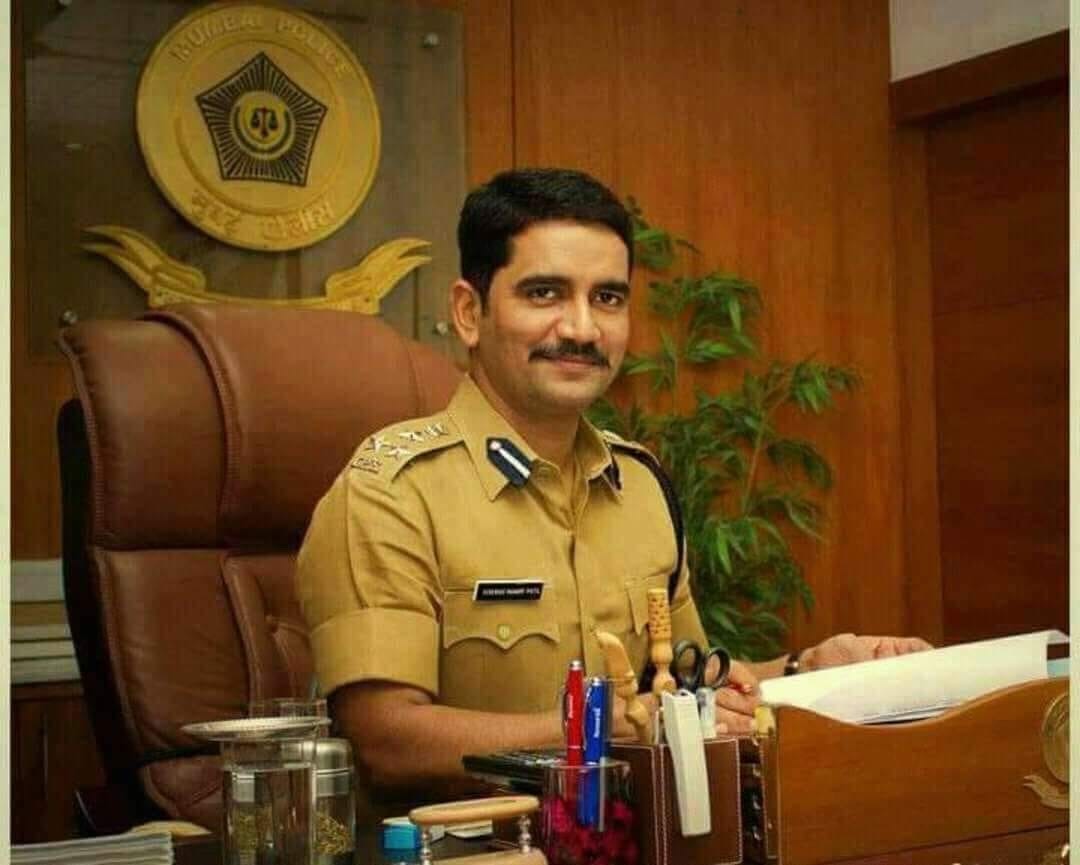
The public image of the officer is built around a single night. The record is mostly about something less dramatic: running organisations. A district force, then a range of districts, then the law-and-order command of a city of twenty million, then a state investigating agency, and now a commissionerate of several thousand personnel.
What recurs across those postings, in his own published statements, is an emphasis on prevention over reaction, on the visible presence of officers in public space, and on the police being approachable to people who are not suspects.
“Ordinary citizens should never fear the police. Only criminals should fear us.” Vishwas Nangre Patil, on taking charge as Commissioner of Police, Nagpur City
Reported by Nagpur Today, 30 June 2026
The writing
He is also, in a small way, a published author.
Mann Mein Hai Vishwas is a Marathi memoir, written with Sadanand Borse and published by Rajhans Prakashan. It follows the route this page describes — village schooling, university, the civil services examination, selection to the Indian Police Service, and the Mumbai years. It found a durable audience among students preparing for the UPSC and MPSC examinations, and was later published in English as Head Held High. A second title, Kar Har Maidan Fateh, followed.
The books are listed here as a matter of record. Where this website needs his own words, it quotes the published sources directly and names them.
Continue through the record.
The postings in sequence, with the context of each command.