Vishwas Nangre Patil Indian Police Service

Home / Impact

05 — The Impact

From action to impact.

Five documented case files, each set out the same way: the issue, the approach, the responsibility, the result, and what can reasonably be drawn from it. Where an outcome has not been published, that is stated instead of estimated.

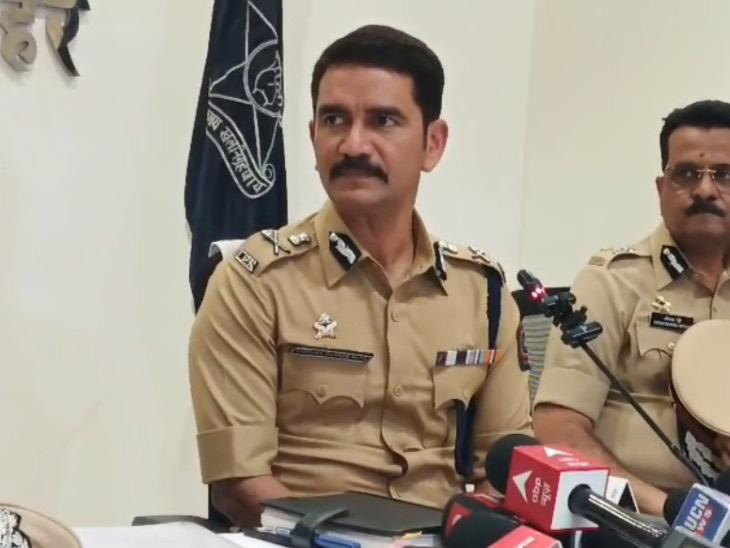
Vishwas Nangre Patil in uniform at a press briefing with microphones on the table in front of him
At a press briefing — the point at which police decisions enter the public record

Almost everything on this page exists because it was announced in public and reported at the time. That is deliberate: the alternative — describing internal work that cannot be checked — is how profiles of senior officers usually go wrong.

It also sets a limit. Four of the five files below are recent, and their results are not yet in. They are presented as documented actions with documented mechanisms, not as achievements.

Case file 01

The Taj Mahal Palace Hotel, 26 November 2008

26–29 November 2008
Zone 1, South Mumbai
Mumbai Police

The issue

On the night of 26 November 2008 a coordinated attack was carried out at several locations across Mumbai simultaneously. One of them was the Taj Mahal Palace Hotel at Apollo Bunder, inside police Zone 1. Several hundred people were in the building, including a large gathering in one of the halls. The units equipped and trained for an armed siege were not yet on site.

The approach

The first police response was made with the officers and weapons available at that hour. It was directed at holding the attackers away from the areas where guests were concentrated, and at getting people out of the building, rather than at resolving the situation — buying the time in which specialist units could arrive and take over.

The responsibility

He was Deputy Commissioner of Police for Zone 1, which placed the hotel in his jurisdiction and made him the senior officer responsible for the initial police response there. He was among the first officers to reach the hotel and entered the building without body armour.

The result

The operation at the hotel continued for several days and was concluded by specialist forces. In 2015 the President's Police Medal for Gallantry — India's highest police award for bravery — was conferred on him for his part in the counter-terrorist operations of those days.

The larger lesson

The institutional point is not about courage, which is not transferable. It is that in the first hour of a mass-casualty attack the response is made by whoever happens to be on duty locally, with whatever they are carrying — not by the units the plan assumes. Much of Indian urban police reform after 2008 followed from exactly that observation: first-responder equipment, quick-response teams held at city level, and control-room protocols that do not depend on a specialist force arriving first.

Sources: Wikipedia, “Vishwas Nangare Patil” (award and posting) · contemporaneous reporting collated by The Better India and Indian Masterminds · The Hitavada, 24 June 2026.
Case file 02

Gunhegaranche Aadan Pradaan — weekly review parades

July 2026
Nagpur City
Commissionerate-wide

The issue

Habitual offenders operate across several police station jurisdictions, but investigations tend to remain confined to the station that registered the case. An offender wanted in three places is often actively pursued in only one, and preventive action is taken by nobody.

The approach

A weekly review parade was introduced in July 2026. Every police station produces five arrested people with serious criminal histories — roughly 180 across the city each week — at the north and south regional headquarters. Each is introduced with their criminal history, method, area of operation and the cases registered against them across jurisdictions. Preventive measures, including externment, are decided there. The Crime Branch monitors the process; those wanted elsewhere are transferred to the relevant station.

The responsibility

The initiative was introduced by the Commissioner of Police and the parades are attended by the Commissioner, the Joint Commissioner, the Additional Commissioners and other senior officers. Updated dossiers on habitual offenders, and investigation of the networks financing or sheltering them, were announced as part of the same effort.

The result

No outcome data has been published at the time of writing. What is documented is the mechanism, its frequency and its scale. Any claim about its effect on crime in Nagpur would be premature, and none is made here.

The larger lesson

The design is a coordination fix rather than an enforcement one: it does not give the force new powers, it makes the force's existing knowledge visible in one room, at a fixed interval, in front of officers senior enough to act on it. Reforms of that shape are cheap and tend to survive the officer who introduced them — or not, depending entirely on whether the interval is kept.

Source: Nagpur Today, 14 July 2026.

Case file 03

Police chowkis as mini police stations

26 August 2026
Nagpur City
Beat policing

The issue

Police chowkis — the small outposts distributed through a city — had largely become reporting points rather than places where policing happens, concentrating both work and public contact at the main police stations.

The approach

Announced in August 2026: convert chowkis into functioning mini police stations on the Mumbai model, each serving the three or four beats of its police station. Officers take complaints there, perform beat duty from there and initiate preventive action there. Alongside it: hundred-member neighbourhood groups per beat officer, twenty smart police booths to be converted into pink booths, a Nirbhaya squad, an anti-goonda squad, CCTV encouraged among residents and businesses, and 56 four-wheelers provided to the force.

The responsibility

Announced by the Commissioner of Police for the Nagpur commissionerate. “Beat policing has to become the backbone of policing,” he said. “We want people to feel that the police are available to them.”

The result

400 preventive actions had already been taken at the time of the announcement, along with 30 traffic hotspots and 50 black spots identified for work. Beyond that, the conversion was announced too recently for outcomes to exist.

The larger lesson

Decentralising a police force is unglamorous and expensive in attention: it means more places to supervise, more registers to check and more chances for standards to drift. The argument for doing it anyway is that preventive knowledge is local, and cannot be gathered from a building people have to travel to.

Source: The Hitavada, 26 August 2026.

Case file 04

The Nagpur crime action plan

25 August 2026
Nagpur City
Commissionerate-wide

The issue

A new commissioner inherits a crime picture rather than choosing one. The published account of his first weeks describes a study of the city's crime hotspots and patterns before any plan was announced.

The approach

A comprehensive action plan published on 25 August 2026, naming the specific problems the force would work on: vehicle theft, burglary, crimes against the person, chain snatching, cyber fraud, the safety of women and children, illegal businesses including hookah centres, traffic management, and law and order during the festival season. The measures attached included expanded CCTV surveillance and analysis of criminal records, increased naka bandi and patrolling, a strengthened cybercrime wing with digital-evidence expertise, Nirbhaya squads, POCSO enforcement, regular assessment of 112 emergency response times, and public awareness campaigns on cyber security.

The responsibility

Announced by the Commissioner of Police. In the same announcement he confirmed government agreement for new police stations at Pimpala, Bhilgaon and Kalamna Market, with funding and vehicles.

The result

No crime figures were cited in the announcement and none have been published since. The plan is recorded here as a stated set of priorities with a stated set of mechanisms.

The larger lesson

The significant thing about a plan of this kind is not its content, which is fairly standard, but its publication. Naming the categories a force will be measured against, in public, at the start of a tenure, creates a record that can be checked later — which is a form of accountability a commissioner imposes on himself.

Sources: Nagpur Today, 25 August 2026 · Nagpur Today, 30 June 2026.

Case file 05

Four years at the Maharashtra Anti-Corruption Bureau

Dec 2022 – Jun 2026
Maharashtra, state-wide
Institutional record

The issue

The Maharashtra Anti-Corruption Bureau registers more corruption cases than any other state agency in India and converts very few of them into convictions. It is a long-standing structural problem of evidence and prosecution rather than of detection.

The approach

The bureau's work through this period remained predominantly trap-based, with a parallel line of disproportionate-assets investigation. Its published caseload for 2024 was 713 cases: 678 traps, 31 disproportionate-assets cases and seven related offences. The 678 traps involved 993 people and Rs 3.18 crore. The revenue department accounted for the largest share of cases, followed by the police department.

The responsibility

He was Additional Director General of Police, Anti-Corruption Bureau, from 15 December 2022 until his transfer to Nagpur in June 2026 — the officer heading the agency during this period. The figures below are the agency's, not his.

The result

Registrations fell over the decade — 713 cases in 2024 against 1,316 in 2014. Conviction remained the weak point: National Crime Records Bureau data for 2024 recorded Maharashtra with the country's highest number of corruption cases and its lowest conviction rate, 7.1 per cent. Improving conviction rates was named among his stated priorities again on taking charge in Nagpur.

The larger lesson

Registration is within an agency's control; conviction is not. Cases pass to prosecutors, then to courts, and are decided years later on evidence gathered at the start. An anti-corruption agency can therefore look busy and be ineffective at the same time — which is why the conviction rate, and not the case count, is the number worth publishing.

Sources: Maharashtra ACB 2024 caseload as reported in Indian financial and legal press · National Crime Records Bureau data for 2024 as reported by The Free Press Journal · The Free Press Journal, December 2022 (appointment).

Figures on the record

Three numbers, each with a source and a limit.

713 Corruption cases registered by the Maharashtra Anti-Corruption Bureau in 2024 — 678 traps, 31 disproportionate-assets cases and seven related offences — against 1,316 a decade earlier in 2014. An agency figure.
7.1% Maharashtra's conviction rate in corruption cases for 2024, the lowest in the country, on National Crime Records Bureau data. Recorded here because it is the constraint the agency works under, not a performance claim.
180 Active criminals produced each week before senior officers at the Nagpur review parades introduced in July 2026 — five from each police station in the city. A mechanism figure, not an outcome.

Sources: National Crime Records Bureau 2024 data as reported by The Free Press Journal · Maharashtra Anti-Corruption Bureau caseload for 2024 as reported in the Indian press · Nagpur Today, 14 July 2026. No figure on this website has been estimated, rounded upward, or attributed to an individual where it belongs to an institution.

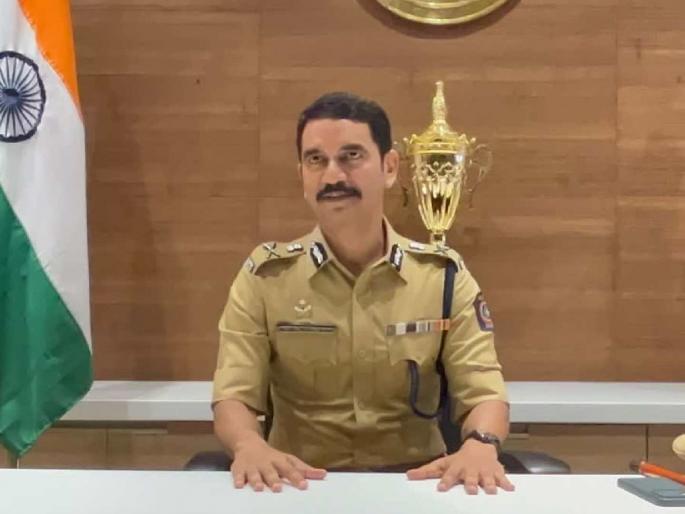
Vishwas Nangre Patil seated at his office desk in uniform beside a trophy and the national flag
At the office desk

The recognitions, with their sources.

The record page sets out what has actually been conferred, by whom, and for what — as a catalogue rather than a trophy wall.