Home / Leadership
03 — The Responsibility
When responsibility becomes leadership.
Six themes, read off the public record. These are analytical headings written for this website — not quotations, not a philosophy attributed to him. Each is anchored to something documented.
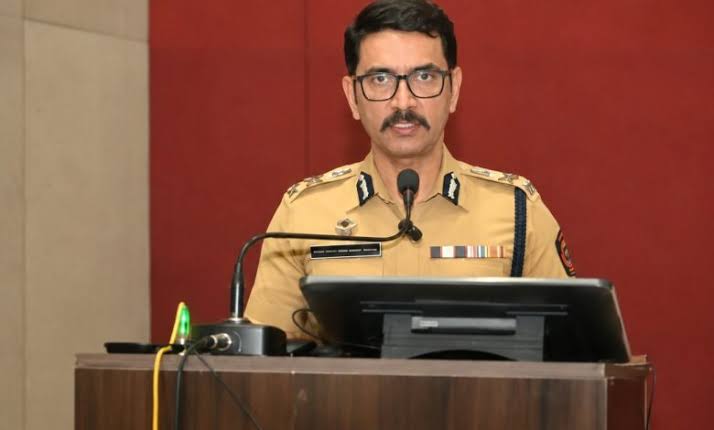
Police leadership is unusual among public professions in that it is exercised twice: slowly, through the administration of a large organisation, and instantly, in the minutes when something has gone wrong. Both are visible in this career, and they call on different things.
The themes below separate them. Where a theme rests on his own published words, the source and date are given. Where it rests on institutional action, it says so.
The defining decisions in this record were made with incomplete information and no time. On the night of 26 November 2008, as Deputy Commissioner of Police for Zone 1, the choice was whether to enter the Taj Mahal Palace Hotel with the officers available at that hour and without body armour, or to hold outside and wait for units equipped for the situation. He entered.
The slower decisions are of a different kind and are also on the record: which crimes a city force will treat as priorities, and where its people will be placed. In Nagpur in August 2026 that took the form of a published action plan naming vehicle theft, burglary, chain snatching, cyber fraud, the safety of women and children, illegal businesses, traffic and festival security as the specific things the force would be measured against.
“Policing should not be limited to investigating crimes after they occur,” he said in announcing it — a decision about where a force spends its attention, made in public.
Discipline in a police organisation is mostly structural: it is what a force does every week whether or not anyone is watching. Two documented examples from the Nagpur commissionerate show the pattern.
The first is a weekly review parade, introduced in July 2026 under the name Gunhegaranche Aadan Pradaan. Each police station produces five arrested people with serious criminal histories — around 180 in all across the city — before the Commissioner, the Joint Commissioner and the Additional Commissioners at the north and south regional headquarters. Each is introduced with their history, method and the cases registered against them across jurisdictions, and preventive action is decided there.
The second is the conversion of police chowkis into functioning mini police stations, announced in August 2026, so that beat officers work from them and take complaints and preventive action there rather than merely reporting through them. “Beat policing has to become the backbone of policing,” he told reporters.
The structural problem the weekly parades were designed to solve is a team problem, and he described it as one: habitual offenders operate across several police station jurisdictions, but investigations tend to stay inside the station that registered the case. Bringing every station's serious arrests into one room in front of the same senior officers is a coordination device before it is anything else.
The same logic runs through the ranks he has held. A range command — Aurangabad, then Kolhapur — is supervision of other commanders rather than direct operations. A Joint Commissioner (Law and Order) in Mumbai holds the whole city's public order through the officers who actually deploy it. Neither job is done alone, and neither produces achievements that belong to one person.
Practical support for the people doing the work appears in the same August 2026 announcements: 56 four-wheelers being provided to the force, and government agreement to new police stations at Pimpala, Bhilgaon and Kalamna Market.
Trust is the theme he has stated most directly and most often, and it is the one where his own words are best documented. On taking charge in Nagpur in June 2026 he said: “Ordinary citizens should never fear the police. Only criminals should fear us.” And: “Every responsible citizen is a police officer without a uniform.”
The measures attached to that language are specific. Beat officers were to be connected to hundred-member neighbourhood groups; twenty smart police booths were to be converted into pink booths for women's safety; a Nirbhaya squad was put on the streets; and awareness campaigns on cyber security were made part of the plan rather than an afterthought to it.
“We want people to feel that the police are available to them,” he said in August 2026. Whether a city comes to feel that is not something a website can assert, so this page records the intention and the mechanism, and leaves the verdict where it belongs.
Response is the part of policing the public actually experiences. In the Nagpur plan it is treated as a measurable quantity: regular assessment of emergency response times on the 112 line, night patrols with high field presence, increased naka bandi and patrolling, and thirty identified traffic hotspots and fifty black spots to be worked on.
The largest response in this record remains 26 November 2008 — the arrival at the Taj Mahal Palace Hotel ahead of the units equipped for it. But the ordinary version of the same quality is what a commissioner can actually build: whether the vehicle arrives, and how quickly.
“Police visibility itself acts as a deterrent to crime,” he said in June 2026 — response reframed as presence, so that the incident is less likely to happen at all.
Four years at the head of the Maharashtra Anti-Corruption Bureau is, by definition, four years spent on the accountability of other public servants. It is also where the limits of the work are most visible: the bureau's difficulty has long been conviction, not registration. National Crime Records Bureau data for 2024 recorded Maharashtra with the highest number of corruption cases in the country and the lowest conviction rate, at 7.1 per cent.
That figure is an institutional fact about a state agency, not a personal one, and it is reported here as such. What is documented on his side of it is the direction of attention: improving conviction rates was named among his stated priorities again on taking charge in Nagpur in June 2026.
On the use of force he has been equally explicit in public: “Encounters are not something to be glorified or feared. If a situation demands such action, it will always be taken strictly within the legal framework.”
A necessary distinction
Institutional achievement is not individual achievement.
Almost everything a senior police officer is credited with was produced by a few thousand people. A commissioner sets priorities, allocates people and equipment, and answers for the result — which is real authority and real responsibility, and is not the same as having done the work.
This website keeps the two apart. Where a figure belongs to an agency, it is labelled as an agency figure. Where a decision or an act is attributable to him personally and is documented, it is described as his. Where neither is available, the page describes the charge and stops.
From themes to the street.
The service page follows the same material outwards — to the points where the organisation actually meets the people it exists for.